I follow the stock market, particularly pharmaceutical and biotechnology companies. Recently, I watched Moderna's stock soar, only to plunge more than 25% following the release of positive clinical trial results for a cancer vaccine developed with Merck.
That contradiction piqued my curiosity. I wanted to understand the science behind the drug, and what I discovered was quite remarkable.
The investigational vaccine, intismeran autogene (mRNA-4157/V940), takes personalized medicine to an entirely new level.
Unlike conventional vaccines manufactured identically for millions of people, this one is designed specifically for each patient.
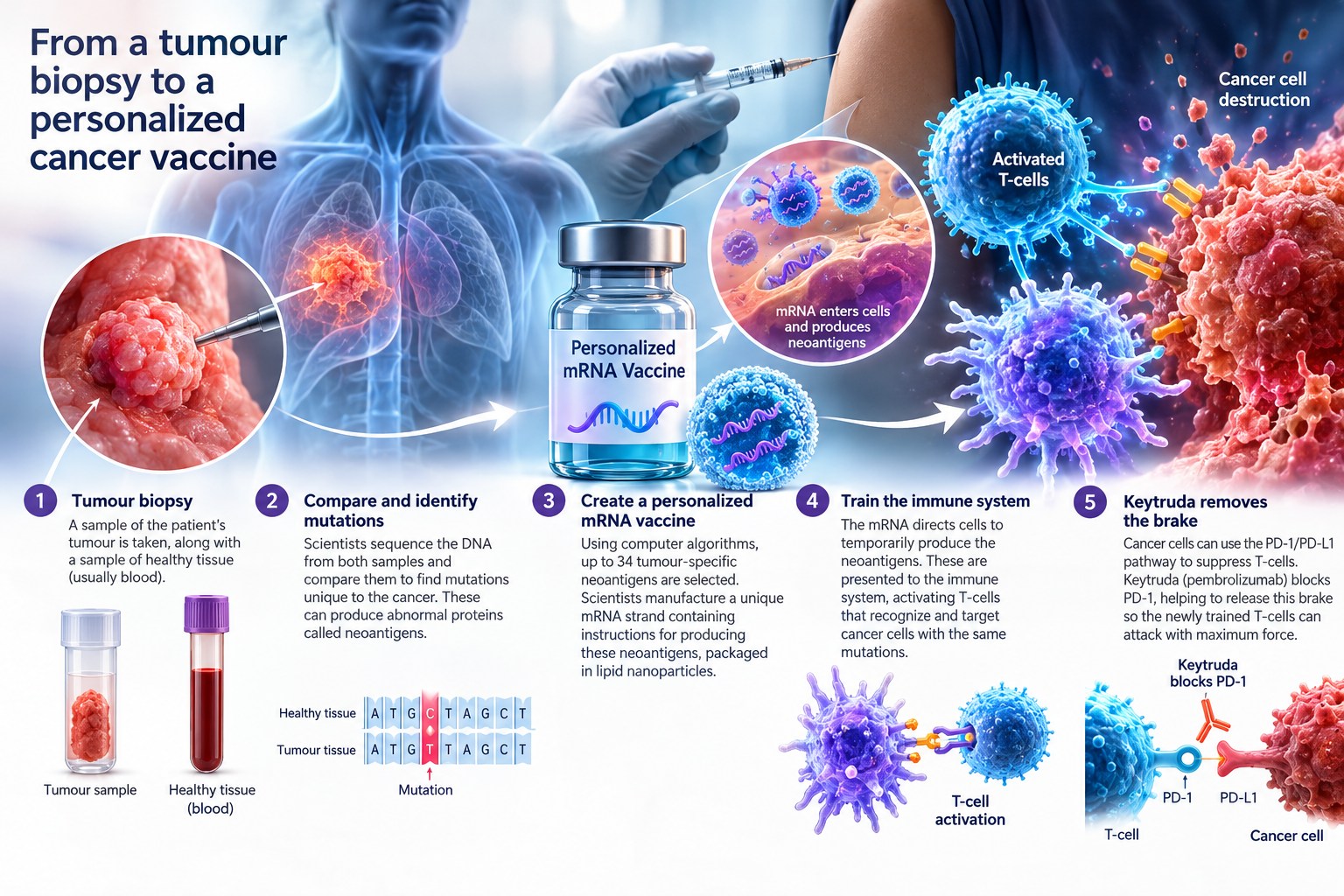
It begins with a biopsy of the patient's tumour, which is compared with a sample of healthy tissue, typically obtained from blood. Scientists sequence the DNA from both samples to identify mutations unique to the cancer.
Using sophisticated algorithms, they select up to 34 tumour-specific neoantigens (abnormal proteins arising from these mutations) most likely to trigger an immune response.
Scientists then manufacture a personalized strand of messenger RNA (mRNA) containing instructions for producing these neoantigens. Once injected, the mRNA directs cells to temporarily produce them, helping activate cancer-fighting T-cells.
Think of it as giving the immune system a personalized "most wanted" poster, teaching it to recognize and attack cancer cells carrying those same mutations.
If the Vaccine Trains the Immune System, Why Is Keytruda Still Needed?
Cancer cells have developed clever ways to escape immune detection, including exploiting the PD-1/PD-L1 pathway, which acts as a brake on T-cell activity.
Merck's Keytruda (pembrolizumab) blocks PD-1, helping release that brake.
The vaccine teaches the immune system WHAT to attack. Keytruda helps ensure it CAN attack.
The combination is designed to generate tumour-specific T-cells while preventing cancer from suppressing their activity.
And the Results?
In a Phase 3 trial involving more than 1,100 patients with high-risk melanoma following surgery, the combination reduced the relative risk of cancer recurrence or death by 42% compared with Keytruda alone.
At two years, approximately 82% of patients receiving the combination remained recurrence-free, compared with 70% receiving Keytruda alone.
The results are encouraging, although the vaccine remains investigational and longer-term data are still needed.
Important questions remain about manufacturing timelines, affordability and patient access and logistical management (those who know..know) particularly within Canada's publicly funded healthcare system.